Remake, reboot, or sequel?
The most useful label is remake. Spike Chunsoft describes the game as revisiting the 2009 title with completely revamped visuals and new narrative content, while the official name deliberately uses RE:BOOT.
It is not a continuation of the original ending and does not require STEINS;GATE 0 as a prerequisite. New scenes may reward series knowledge, but the central plot is the story that introduced Okabe and the Future Gadget Laboratory.
What story does it retell?
RE:BOOT returns to the 2010 Akihabara story: Okabe's improvised laboratory discovers that a modified microwave can send messages into the past, and seemingly small changes begin pushing the group across dangerous worldlines.
The familiar cast, central conspiracy, and Phone Trigger structure remain. This is why calling it a sequel would set the wrong expectation even though one route contains new material.
What is genuinely new?
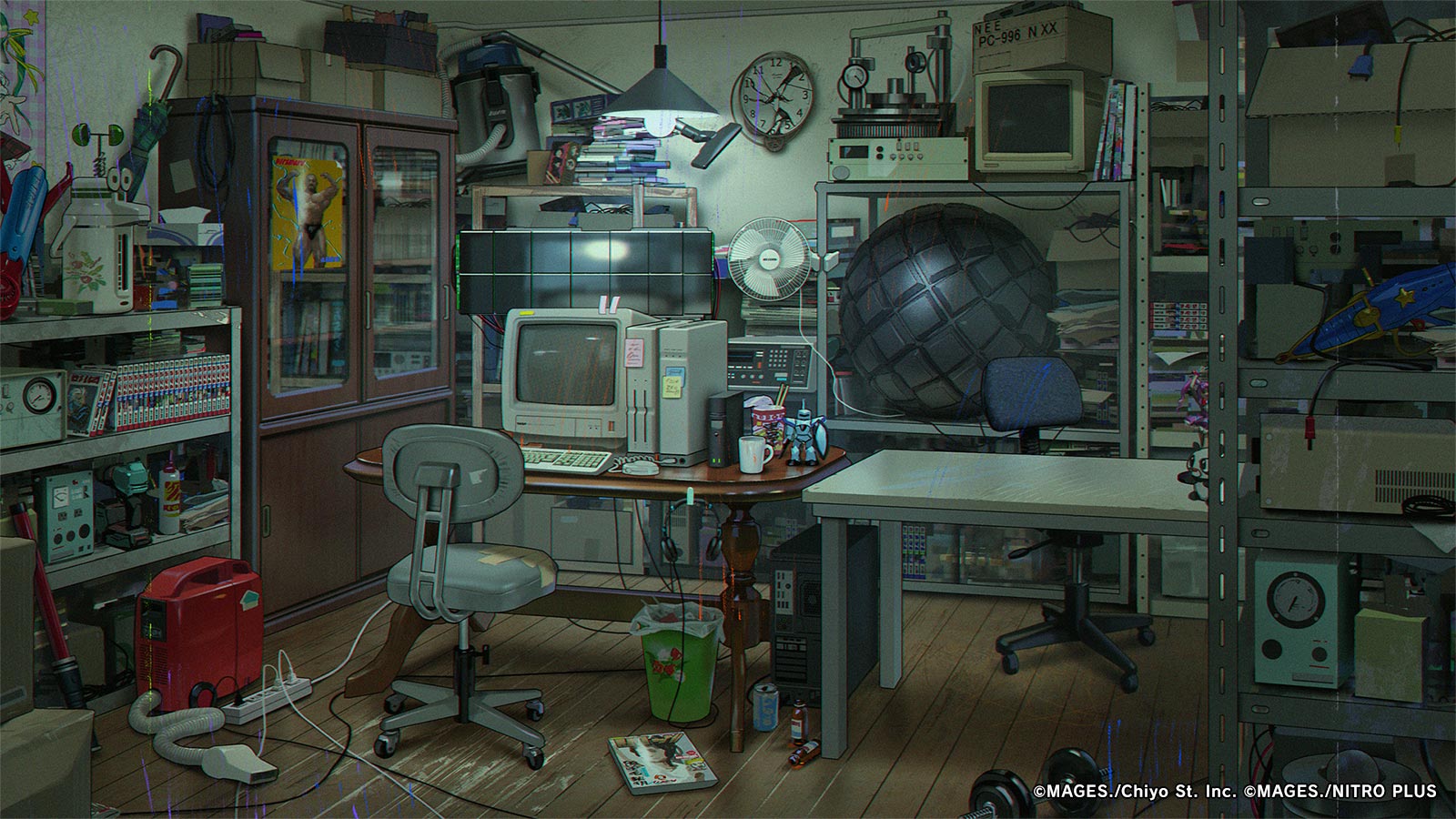
- All characters, backgrounds, and event stills were redrawn.
- Voices were re-recorded and the background music was remade.
- E-mote animation adds subtle motion to illustrated characters.
- New dialogue, narration, a new worldline, and a new ending expand the retelling.
Why the Elite script matters
A traditional remake might preserve the original script and only replace its production layer. RE:BOOT instead begins from Elite's edited scenario, so its pacing and some text coverage differ from the first visual novel.
That choice is neither automatically better nor worse. It makes the release more approachable, but readers comparing exact lines should treat RE:BOOT as a distinct edition rather than a definitive archive of every prior scene.